A chance encounter led me to discover my musical voice.
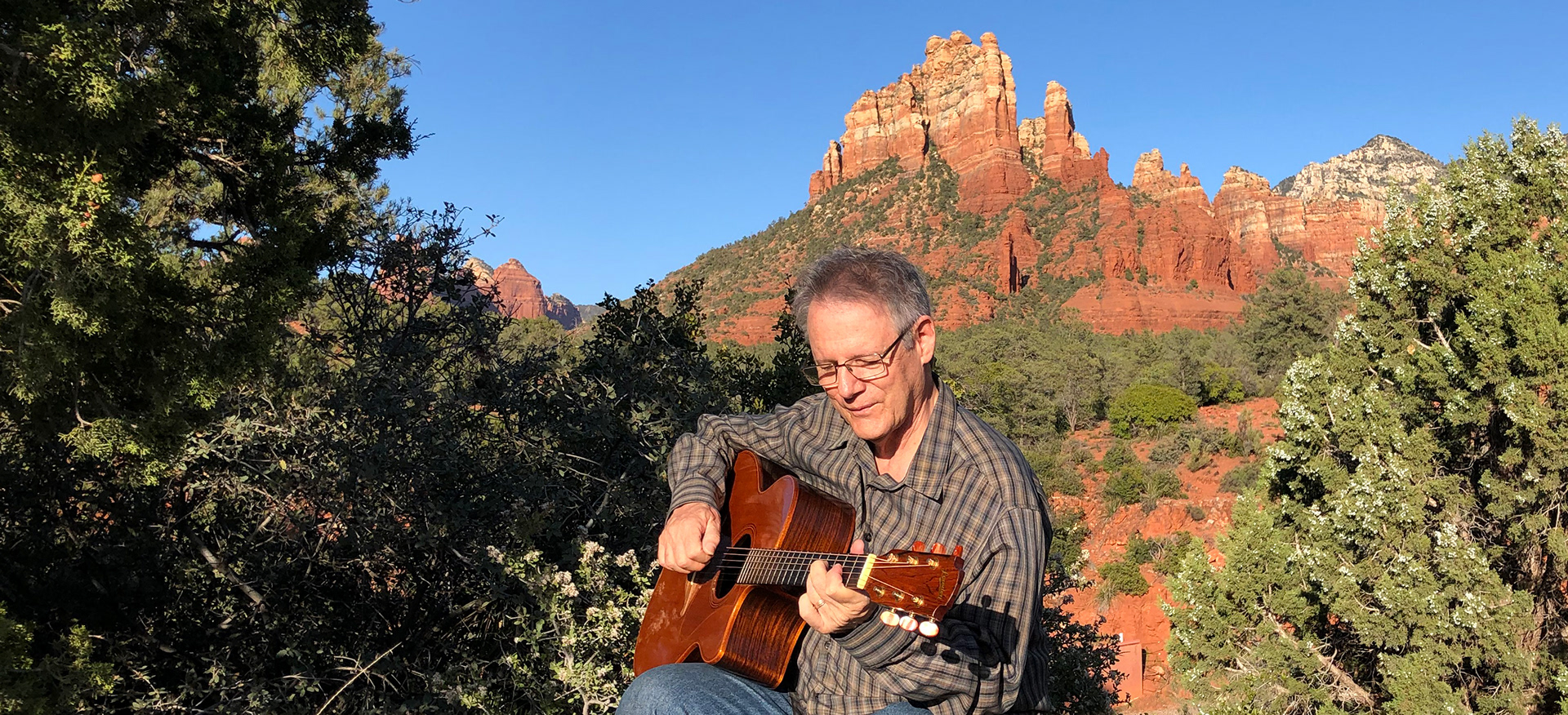
When I first started Wood & Strings Music Studio, it wasn't much more than guitar lessons in the living room of our modest four-room rental in Belmont, Massachusetts. One afternoon, a teenage girl answered my newspaper ad for lessons.
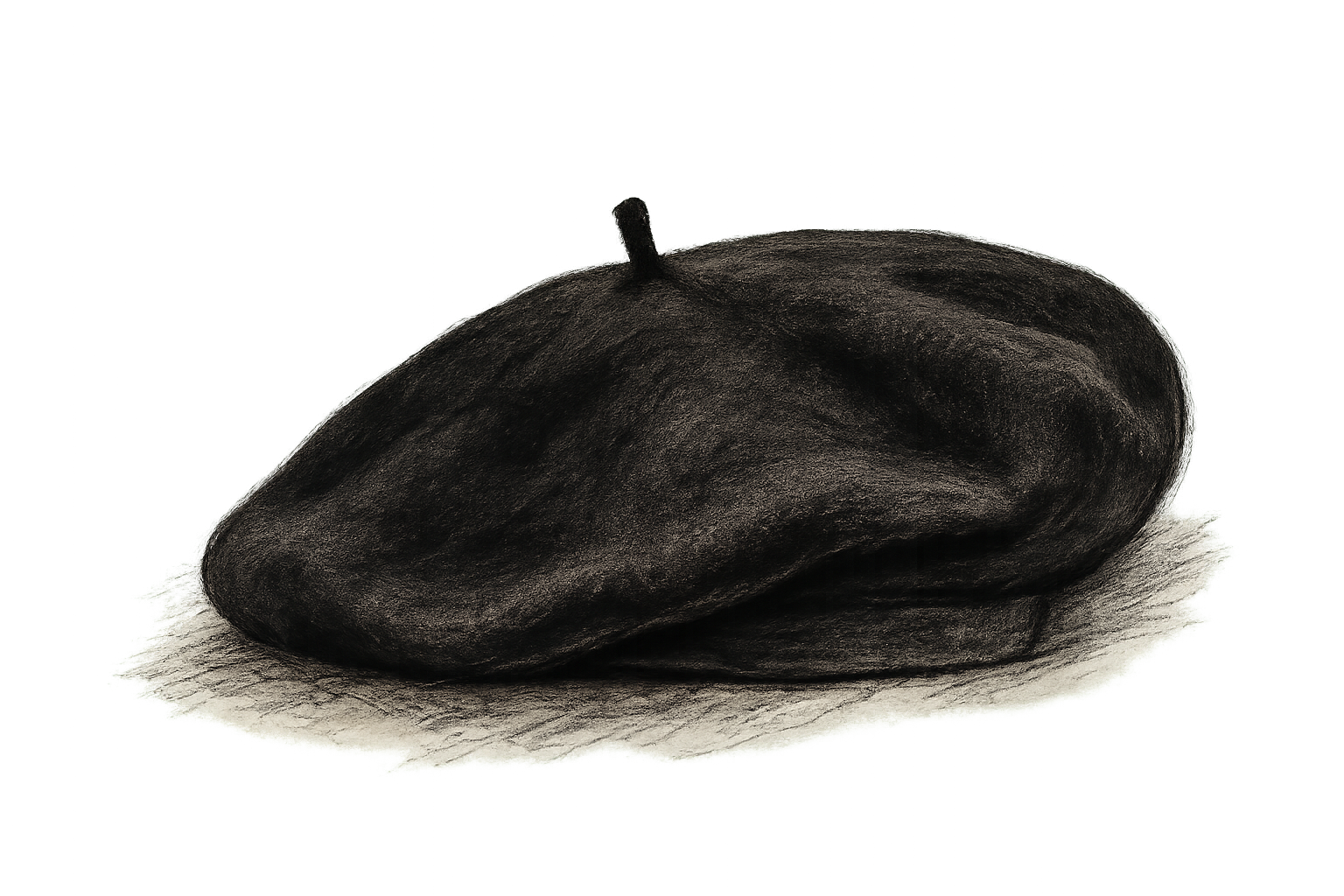
I remember she was wearing a gray beret.
Tucked under her arm was an LP by a young French-Algerian guitarist named Pierre Bensusan. I'd never heard of him.
She handed me the album and asked if I could teach her to play like him.
I smiled and told her I'd give it a listen.
After she left, I put the record on my turntable.
I was stunned.
I'd never heard a guitar sound like that before.
There was an emotional intensity in Pierre's playing that reached me on a level I still find difficult to describe. It wasn't simply that he played beautifully. There was a passion in every phrase that seemed to speak directly to something deep inside me.
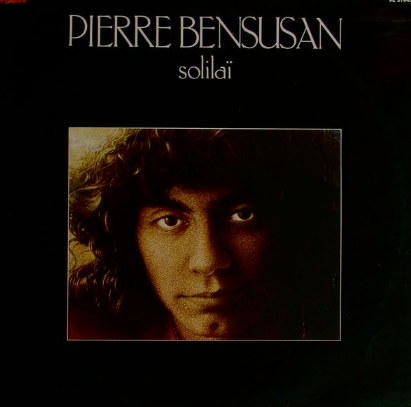
Then I heard the opening track from another of his albums, Solilai, titled "Nice Feeling."
Before the piece was over, I realized tears were running down my face.
No piece of music had ever affected me that way. It literally took my breath away.
Pierre played in an alternate guitar tuning called DADGAD, and it transformed the instrument into something almost harp-like. The open strings rang into one another with a richness and resonance I'd never heard before. I knew I had to understand this musical language.
The student came back a few days later to retrieve her album and, for reasons I no longer remember, never took another lesson.
But the seed had been planted.
Looking back now, it's remarkable how often the course of our lives can be changed by a chance encounter that seemed insignificant at the time.
I immersed myself in DADGAD tuning. My guitar rarely left it.
Around that time, I had become friends with Eric Schoenberg, the co-owner of The Music Emporium in nearby Cambridge and a remarkable fingerstyle guitarist. Eric had introduced Pierre to American audiences and had begun importing the beautiful Lowden guitars Pierre played.
There were several Lowdens hanging on the wall, but one particular instrument kept calling to me.
Every chance I got, I'd take it down, disappear into a quiet room in the back, and spend hours exploring this new musical language.
Eventually I traded in my Martin and brought the Lowden home.
I fell hopelessly in love with that guitar.
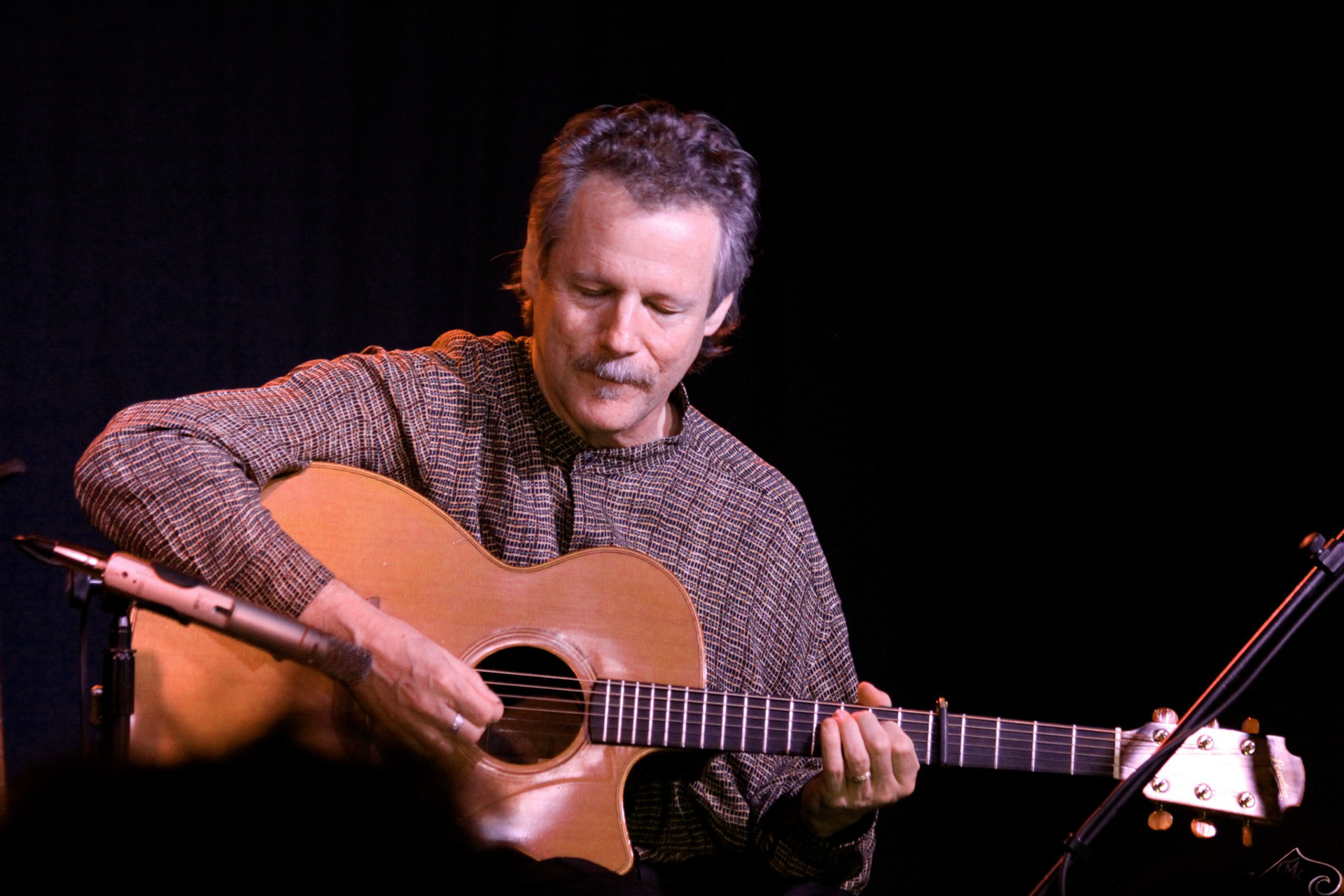
For months I sat beside my record player with the Lowden in my lap, listening to "Nice Feeling" over and over, learning it phrase by phrase. Some passages were beyond my abilities, so I simplified them. Others took weeks to understand.
Eventually I could play it.
Then I learned another Pierre piece... and another.
Before long, I had developed a bit of a reputation around the Boston coffeehouses as "the guy who played in that unusual tuning."
Life moved on.
Wood & Strings grew from a tiny teaching studio into a thriving music center with twenty teachers, hundreds of students, a retail store, and a concert series. Then, in 1988, I sold the business and moved to Arizona.
That decision changed my life in more ways than I could have imagined.
A few years later I met Lynn Trombetta. She would become my musical partner in Meadowlark and, eventually, my life partner and wife.
When we first began performing together, we played mostly Celtic music—me on guitar, often in DADGAD tuning, and Lynn on flute and Irish whistles.
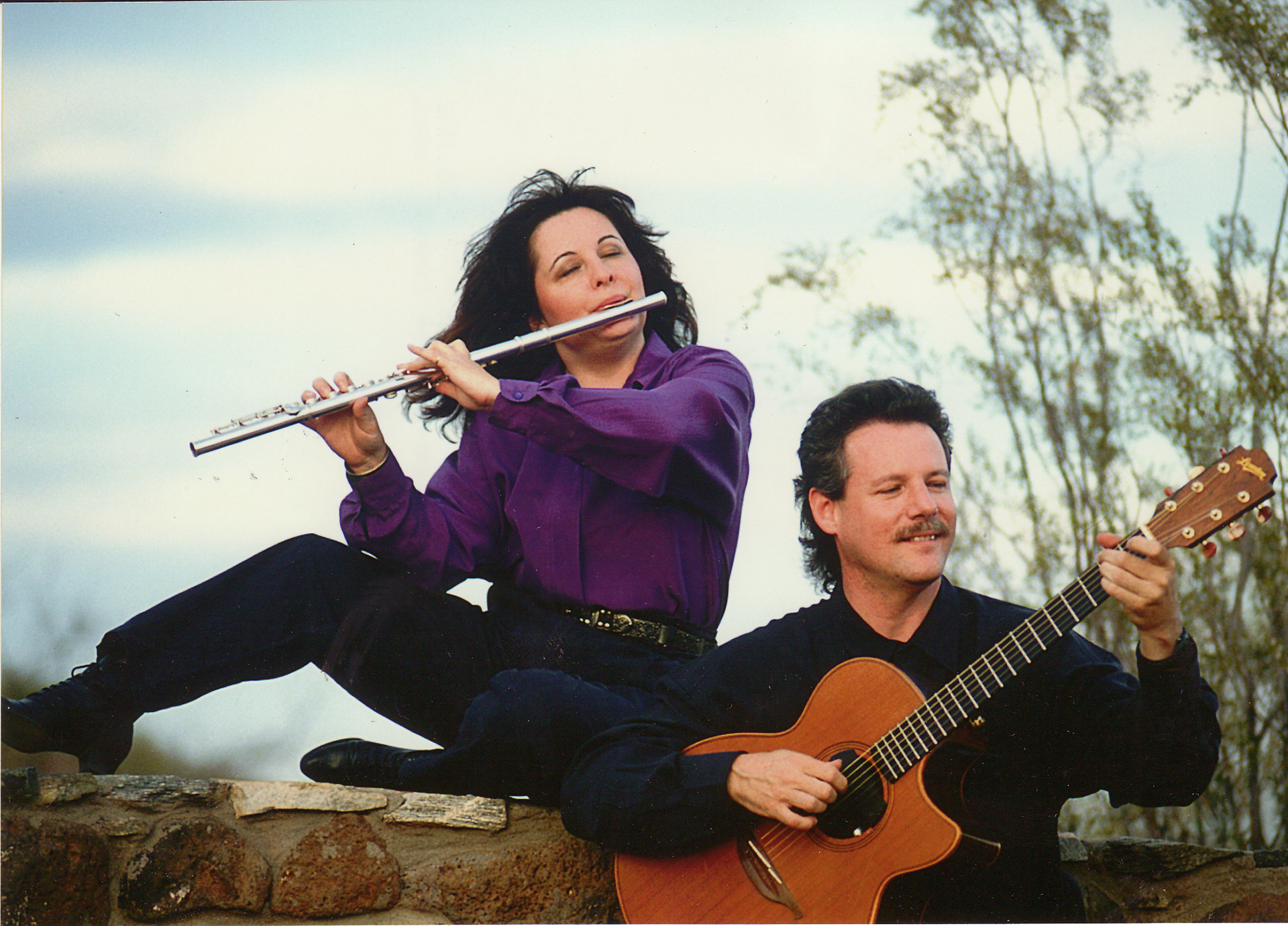
Our first regular engagement was at The Farm at South Mountain, a beautiful café tucked beneath a pecan orchard in Phoenix. It quickly became Meadowlark's musical home, where we performed almost every weekend for the next several years.
As we played outdoors, the birds seemed fascinated by Lynn's flute and whistles, often singing back to us from the trees overhead and splashed joyfully in the stream nearby.
When it came time to choose a name for the duo, the decision almost made itself:
Meadowlark.
A few months later we were touring the West Coast, ending at the Seattle Folklife Festival.
Somewhere along that trip, during a quiet stretch of highway, I had what I can only describe as a satori.
For years I'd struggled to write songs. Surrounded by so many extraordinary New England songwriters, I'd never quite found confidence in my own voice.
Then it suddenly became obvious...
With Lynn beside me, I had found a voice that didn't need lyrics.
It was as though someone had pulled the stopper from a bottle.
As we drove the coast—through redwood forests, mountain passes, and along rugged shorelines—melodies began arriving almost faster than I could capture them.
I absorbed the beauty around me, and music simply poured out.
By the time we returned home, I had written enough music for our first Meadowlark recording, Dance of the Sandpiper.
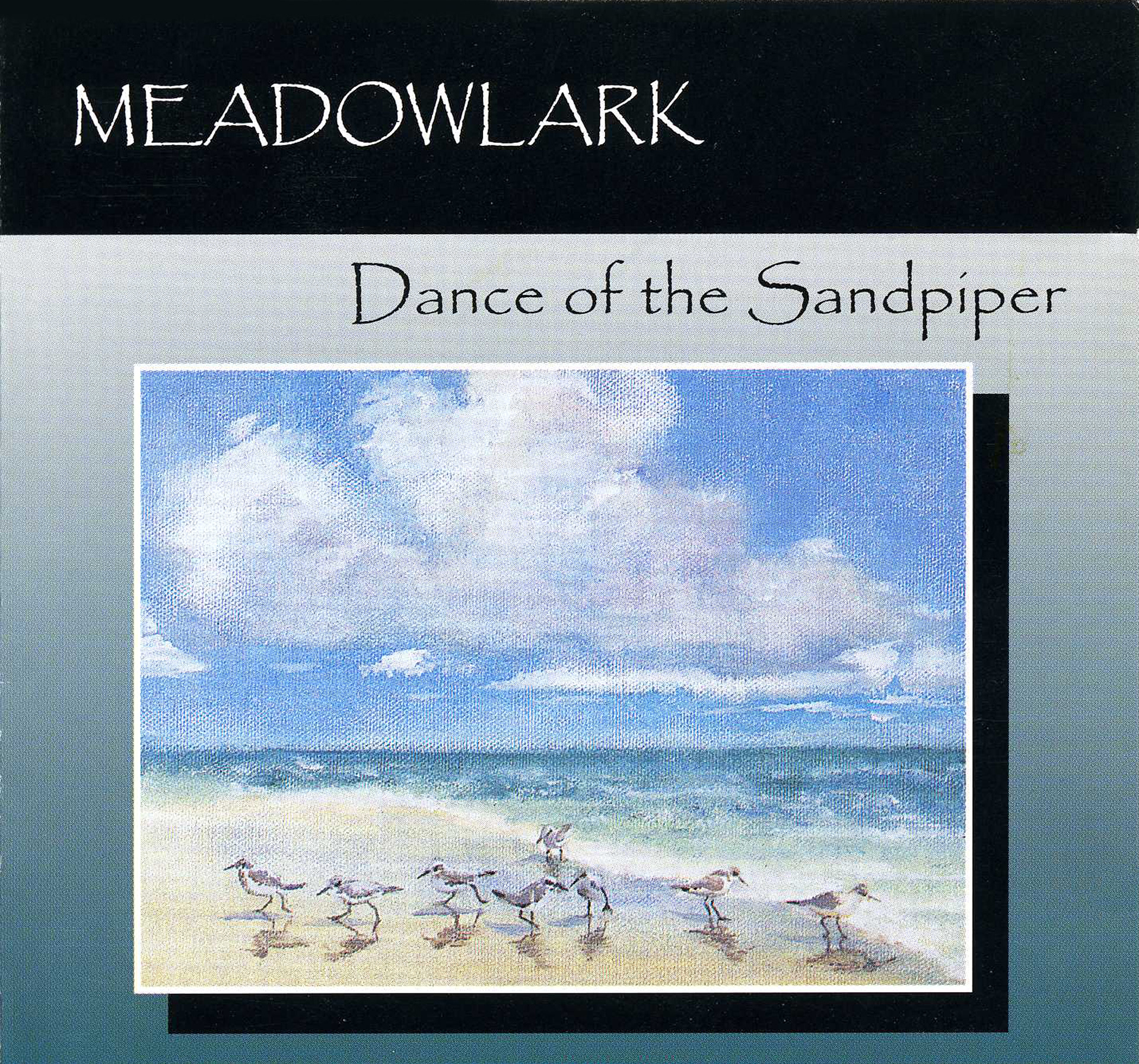
Over the next few years, those compositions became the heart of Meadowlark. Drawing inspiration from Celtic, Mediterranean, and African traditions, as well as the beauty of the natural world, we recorded our first four albums of original instrumental music.
Throughout that extraordinary creative season that eventually produced nine Meadowlark recordings, the harp-like voice of DADGAD became an unmistakable part of my own musical language and along with Lynn’s flute and whistles, the signature sound of Meadowlark.
Years later, life quietly completed the circle.
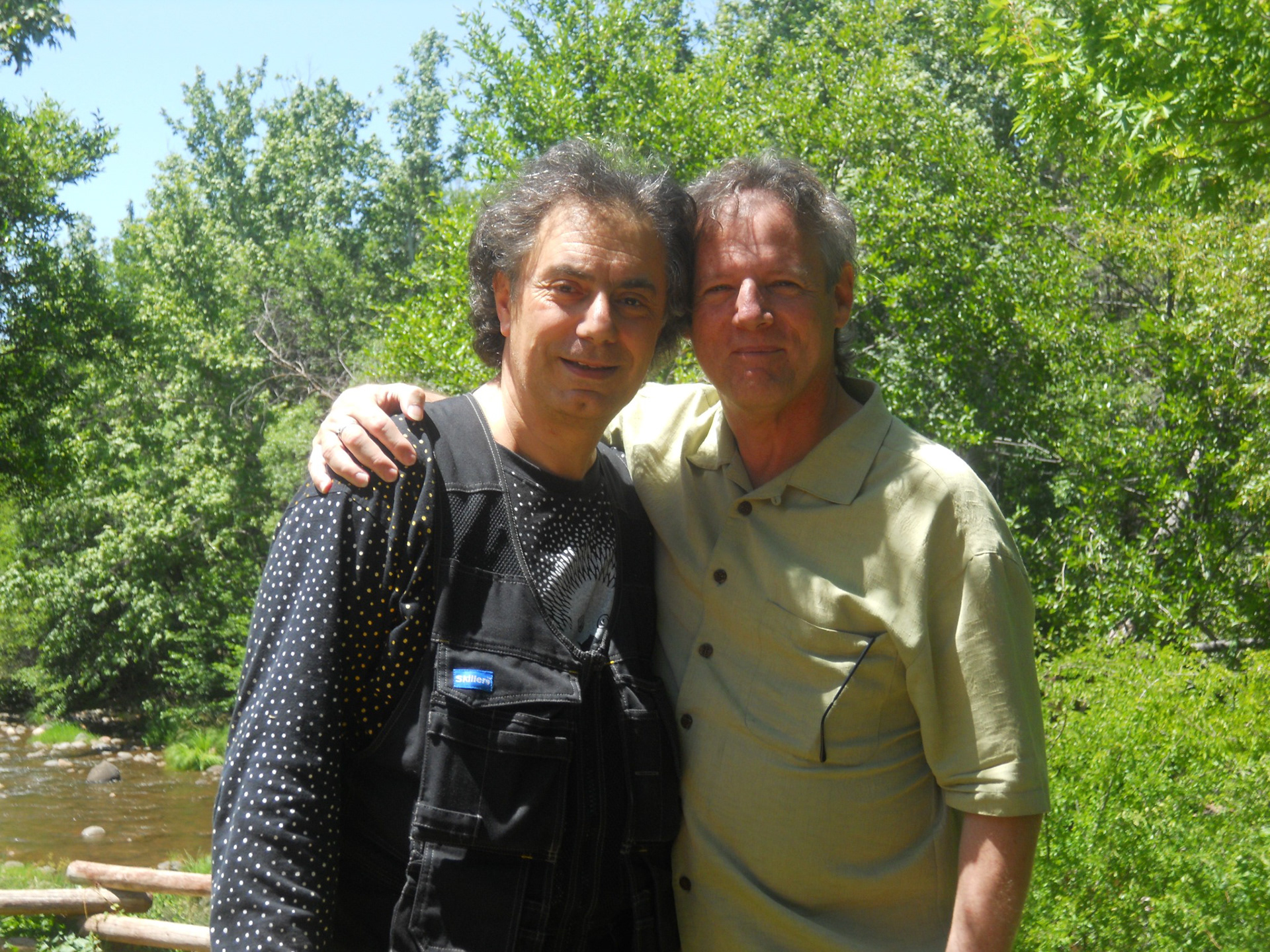
On my invitation, Pierre eventually came to Sedona to perform.
I had the privilege of presenting his concert and hosting a master class.
He stayed with us in our creekside home—not once, but twice, the second visit with his wife, Doatea.
At one point, he picked up my old Lowden and played it.
The very guitar I'd bought because of him.
Today, that old Lowden still hangs in my music room, permanently tuned to DADGAD, just as it has been for decades. I visit it less often these days as my musical journey continues to evolve. But every time I lift it from its stand and hear those open strings ringing together, I'm reminded that an entire chapter of my musical life—and the musical voice that eventually became Meadowlark—began the day a young girl wearing a beret walked into my studio one afternoon carrying an album under her arm.
Continue the Journey
If this story spoke to you, I'd love for you to hear the music that grew from it.
Or perhaps you'd like to read more...